

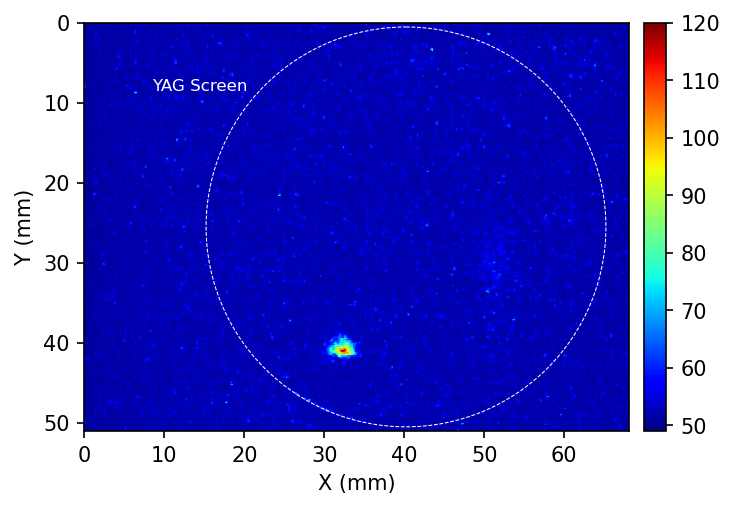
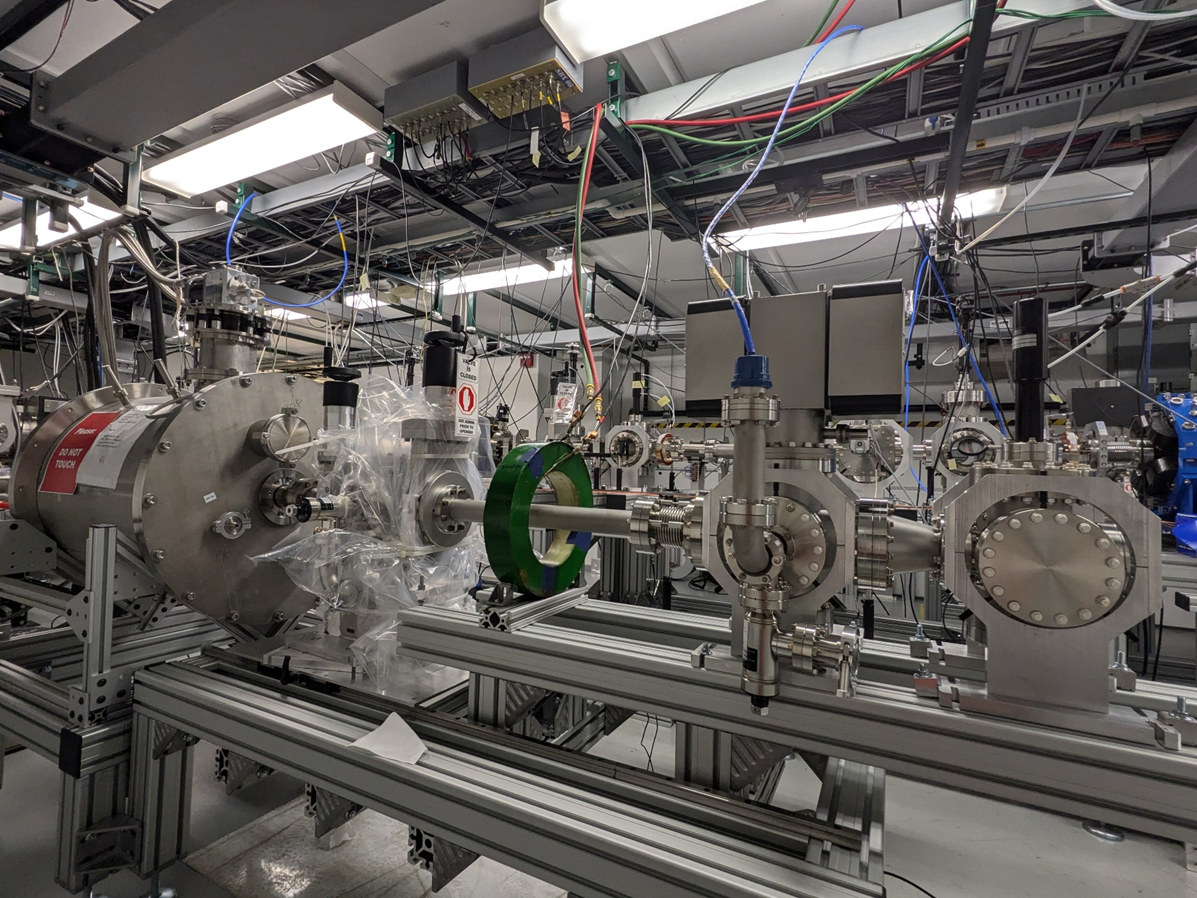
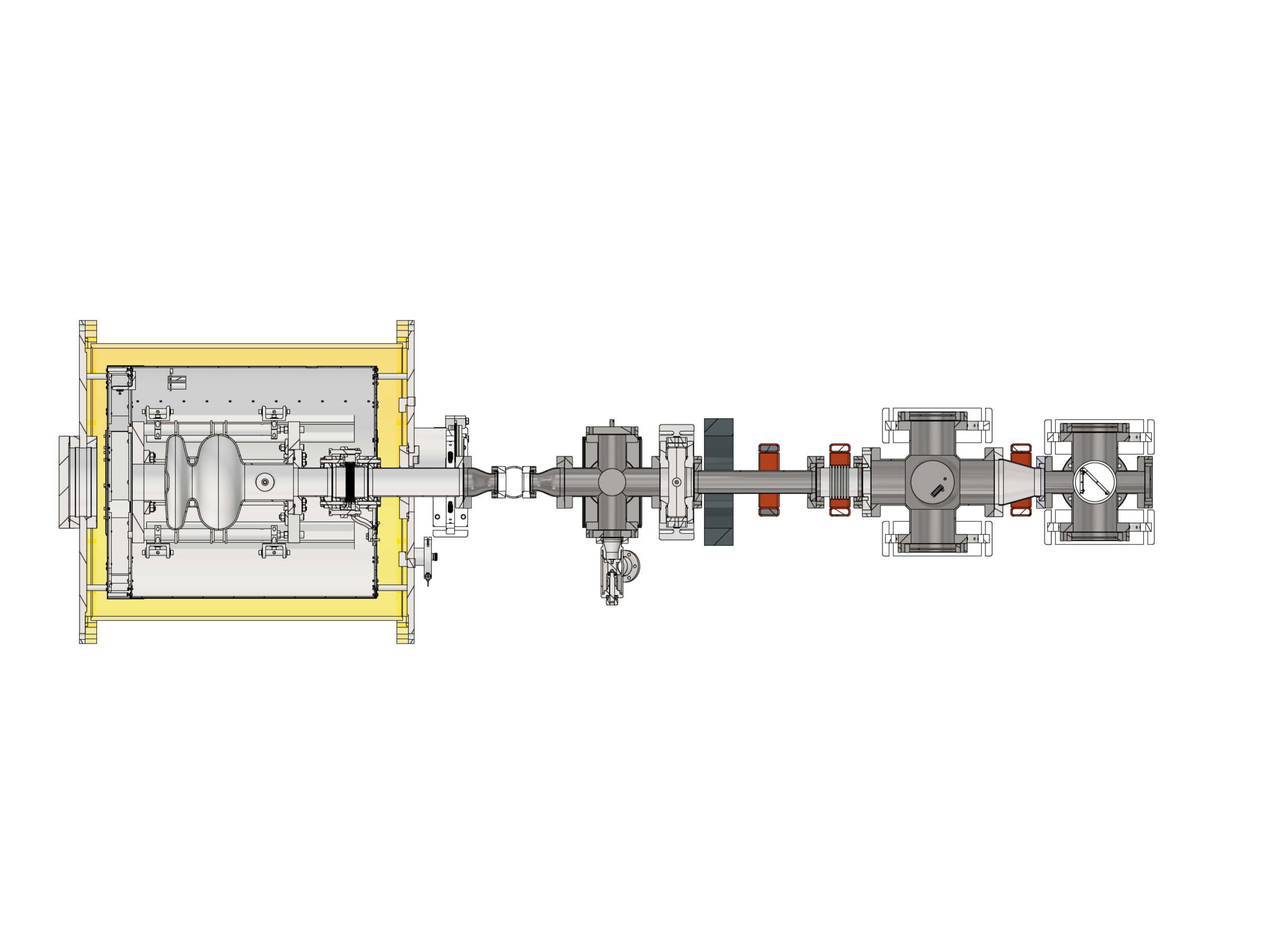
We’re thrilled to announce a major breakthrough at Euclid: the successful production of the first beam (Dec. 2nd, 2025) from the world’s first conduction-cooled SRF photogun.
This achievement is the result of a five-year collaboration with Fermilab and Argonne National Laboratory, developing a continuous-wave (CW), 1.5-cell, MeV-scale superconducting radio frequency (SRF) photogun operating at 1.3 GHz. Our goal has been to enable ultra-stable electron beams for Ultrafast Electron Microscopy and Electron Diffraction (UEM/UED) applications, capitalizing on the exceptional shot-to-shot stability that SRF technology offers over conventional room-temperature RF photoguns.
Both UEM and UED aim to record in “real time” the dynamics of materials and chemical systems at the atomic scale. This combined spatio-temporal resolution in the femtosecond-nanometer range or better records physics of the atomic scale on the timescale that it occurs offering insights into the fundamental building blocks of our world.
Historically, SRF systems were too costly and complex for widespread industrial use. But two key advancements, Nb₃Sn coatings and conduction cooling, have changed the landscape. This new SRF photogun delivers true CW operation while dissipating only ~2 W of RF power, eliminating the need for high-power RF infrastructure and dramatically reducing facility footprint. It also features a raised Nb₃Sn backwall photocathode, removing the need for external inserts and simplifying the overall design.
More updates are coming soon. Stay tuned!
For more information on the SRF photogun, see our website.